Strawberry Notes or Added Flavor? Six Things the Coffee Forums Are Arguing About
Reddit spent the week arguing about whether a strawberry-forward SL-28 was infused, and whether the skepticism has gone too far. Also: a CHF 4,860 Swiss machine, cheap Costco beans, dying kettles and one mislabeled roast bag.
Topic 1
Quebraditas SL-28 is the coffee the pour-over forums are arguing about, and the suspicion has spread from a list of pre-flavored farms to Hoffmann's fermentation project.
Community


On r/pourover, u/coolstuffeh brewed a washed SL-28 from Edinson Argote's Quebraditas project — roasted by Taith — and described it as "very strawberry like, decent body" before asking the obvious question:  is this stuff infused?.
The most-upvoted reply does not bother with proof: u/hrozvitnr listed the farms he now treats as flavored by default — Quebraditas, Chorro Alto, Las Flores, Campo Hermoso, Granja Paraiso 92 and Wilton Benitez's Finca Anaya — and closed with "if there's a coffee from those farm i already expected them as flavored coffee".
u/LyKosa91, who calls Quebraditas "the farm that's produced the most cups that have made me call bullshit", concedes he cannot prove it; u/Phineasfogg, who finds the discourse "a bit heated and conspiratorial", has stopped buying from two of those producers anyway: "I do not believe, for instance, that there is a rare coffee variety that tastes like pina colada."
The argument followed the same crowd into the thread on The Fermentation Project, the Hoffmann × Lucia Solis tasting set built around a single lot processed four ways, where the poster concluded after brewing all four: "A lot of them are definitely infused or otherwise enhanced, and not just Colombian ones."
u/Quarkonium2925 called that leap "genuinely insane", u/emu737 softened the premise by noting that a naturally processed coffee can smell and taste enhanced simply because the cherry dried around the bean, and u/InfusedVisions put the skepticism where it is best spent: yeast inoculation on its own is subtle, so an "advanced washed" coffee that arrives tasting like a bag of candy is the one to question.
Topic 2
Costco's Kirkland Signature single origins won a debate about which whole bean is worth buying for espresso, over the local roaster's bag.
Deal
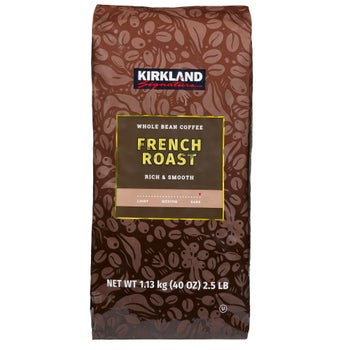
The question in r/espresso was blunt — which currently available Costco whole bean actually works for espresso, or whether the bags are too old and a local roaster is worth the premium.
The most-upvoted reply, from u/80_Inch_Shitlord, names the Kirkland Signature single origin: "The Kirkland Signature single origin (the ones I've seen have been either Guatemala, Mexico, or Ethiopia) is what I'd recommend."
The more useful finding is that Costco is not one store: u/JasonMHough warned that "not all Costcos carry the same beans" and that many warehouses shelf a local roaster's bags instead of Kirkland, so u/Responsible-Fee7057's advice is to look for "any locally sourced beans as they are likely to be the freshest."
The original poster turned out to be in Chicago, where the warehouses carry Two Brothers, and u/Extension-Long4483 reported a West Michigan store selling 2 lb local-roaster bags for $20, "roasted 1-3 weeks before being sold at Costco."
One caveat worth knowing before buying in bulk: Costco's own listing describes the Kirkland Signature House Blend as "Custom Roasted by Starbucks" — a large-scale roast rather than a specialty one. And at least one local option has a detractor: u/Ordinary-Bee-6612 warns people in the DMV off Greenberry's, which says medium on the bag but yields what he calls "a really oily, dark and unpleasant pungent" coffee.
Topic 3
Zuriga's CHF 4,860 T2 drew a glowing hands-on write-up from the Berlin pop-up, but the first thing owners in the comments attacked was the electronics.
Release
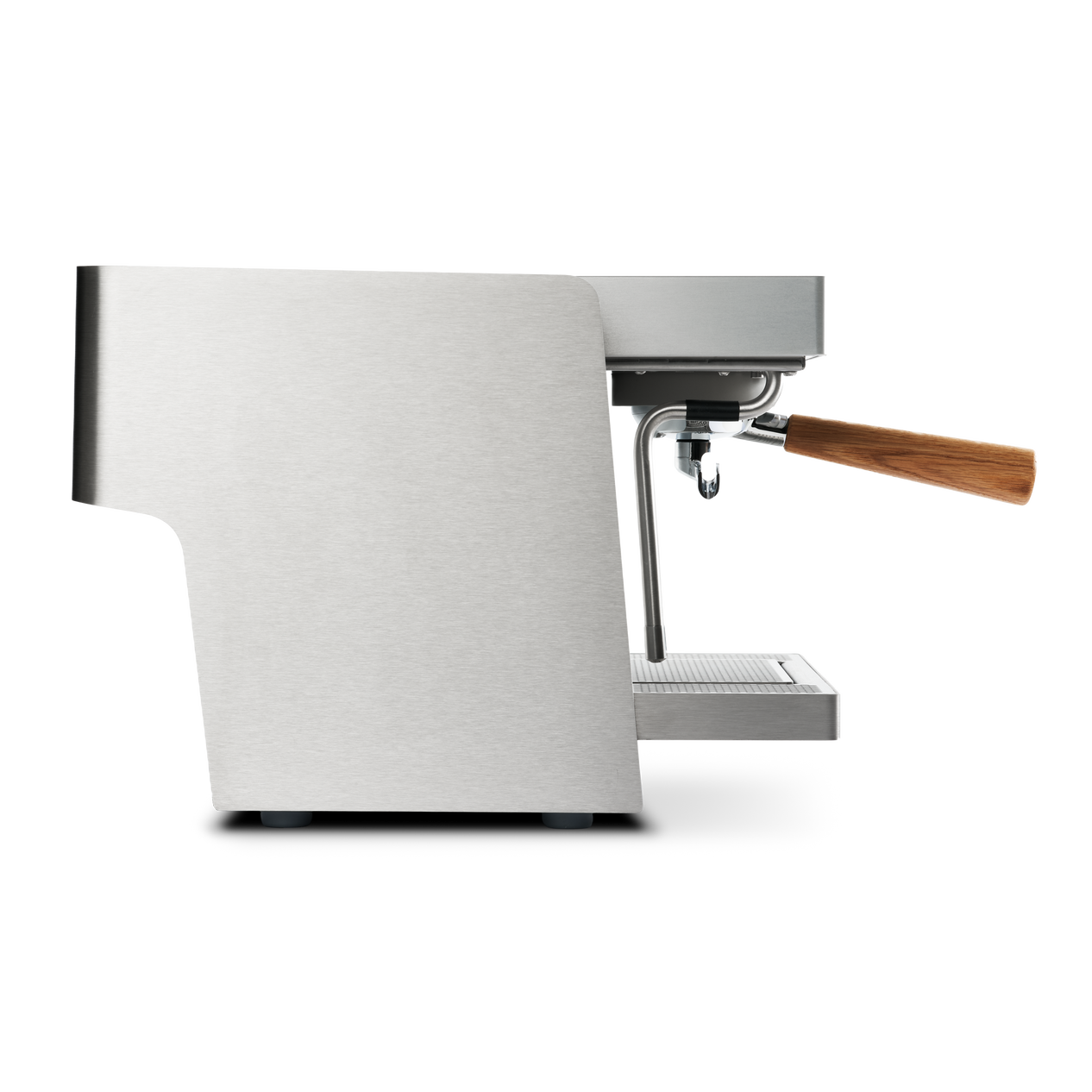
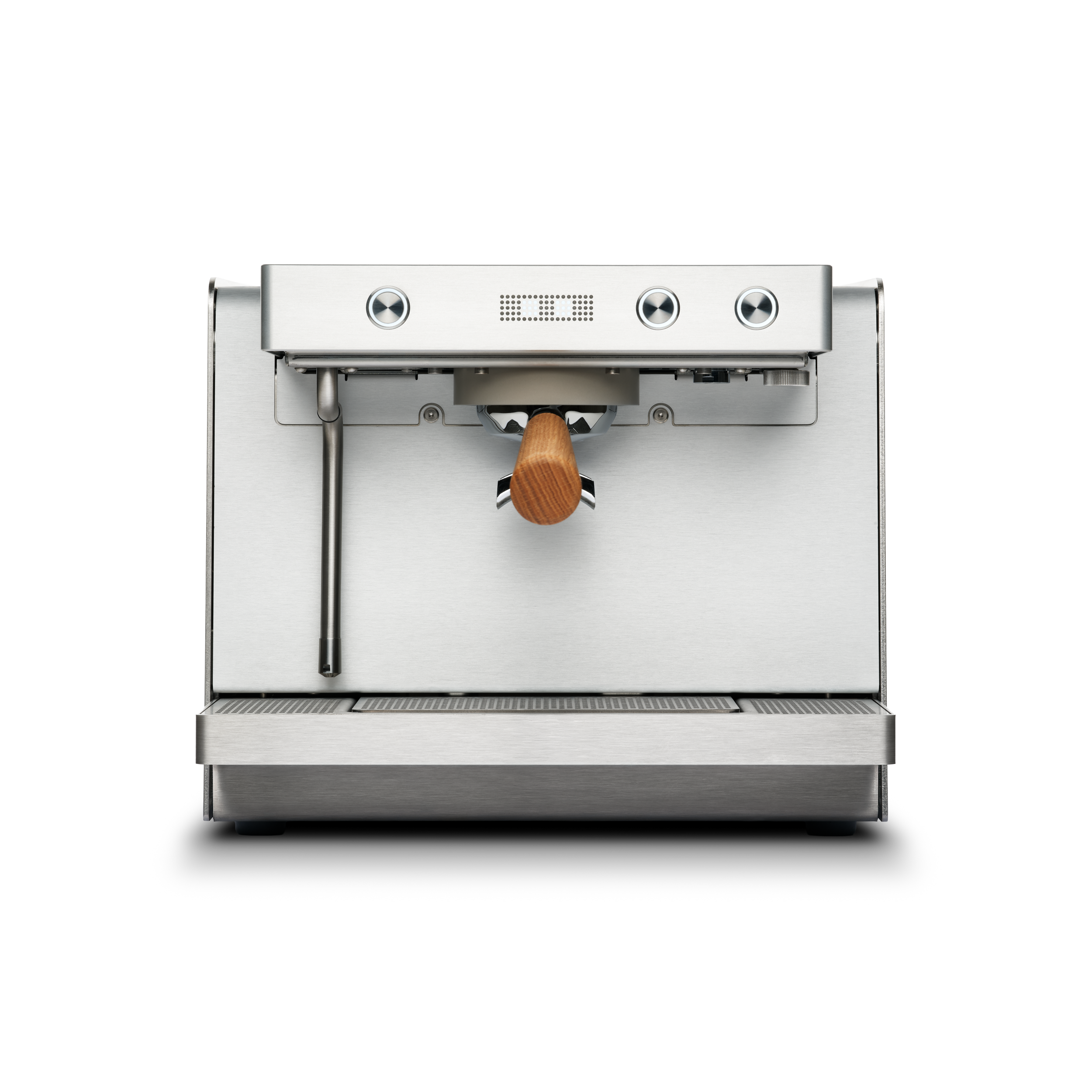
The write-up in r/espresso comes from a hands-on session at Zuriga's Berlin pop-up, where the built-in scale brews by weight, five recipes come pre-configured — four flow-controlled toward a target shot time and mass, one standard 9-bar pressure-controlled shot — and build quality drew praise for tight panel gaps and instant steam.
What owners cannot do is design their own flow or pressure profile, even though the machine's rotary pump and proportional valve would support it; the water tank is small, not removable, and fitted with a level sensor that guarantees one last shot.
Zuriga's own listing prices the T2 at CHF 4,860 in chrome (pre-order) and CHF 5,380 in black, and the published specs describe the parts the commenters then argue about: a thick-film heater, pressure, temperature, flow and cup weight sampled more than ten times a second, a "Shot-Repair" smart profiler, and a warm-up of around 1.5 minutes according to
Kaffeemacher.
u/janisbiz delivered the most-upvoted objection — "Automation for 5k with 2y warranty, no thanks" — then spelled out the worry that once the built-in scale starts misbehaving and the two-year warranty is gone, most of the machine's features are, in his words, "out of the window".
u/spencer2294 asked about water-temperature consistency from a thick-film heater "not a traditional boiler" and why not a proven thermoblock at a quarter of the cost, u/hobbyhoarder criticised the power button's position at the bottom of the machine where it will collect splashes, and u/Ironhide2x summarised the design philosophy as "function follows form".
The line that will matter most to anyone tempted: in the same thread, the poster notes that ordering now means delivery in early 2028.
Topic 4
Micra shots that taste good but miss "deep espresso flavour" came down to burrs, not the machine: flat for clarity, conical for body.
Gear

The setup in the r/espresso thread is a La Marzocco Micra with a Eureka Libra 65 grinder, an 18 g dose into the 17 g stock basket, 34 g out in about 24 seconds, boiler at 92 °C, and no obvious fault — just a body-and-depth gap the owner could taste but not name.
The single highest-voted reply, by a wide margin, is a joke: u/Chemical_Act_7648's "It's probably because you are using cheap equipment", which outscored every substantive answer in the thread.
The substantive replies converge on the grinder: u/JumpyNeedleworker953 swapped his stock all-purpose burrs for the Black Diamond Italian Espresso set because the originals "tend to be aiming towards clarity and fruitiness rather than body if your making espressos", and u/Bepus supplied the cleaner explanation — "Flat burr grinders are more consistent and therefore produce more clarity, but that can seem like less depth of flavor if you're used to the grind size variability of conical."
u/coffee-identity added a measurement caution — boiler temperature is not brew temperature, and several degrees can be lost before the water reaches the puck.
The burr-geometry explanation is the community's, not a laboratory result, but it is testable and it costs less than a new machine — closer to u/HandsyBread's advice to change one variable at a time than to a parts order.
Topic 5
Three kettle failures surfaced in the pour-over forums the same day, from a Stagg EKG that stopped regulating to a Buono that rusted in three months.
Gear


The cluster in r/pourover reads like a maintenance reminder. One poster's Fellow Stagg EKG "seems to have finally crapped out" and he is shopping for something with a faster flow and a better warranty; another went through two temperature-control kettles in three years, both of which eventually stopped regulating heat and kept boiling after being switched off, the second failing just past its warranty; and a third found rust spots inside a three-month-old Hario Buono 1.2 L while using soft Scottish tap water.
u/fragmental's "Descale them." is the top answer, and the longer replies split the cause the same way: u/MarkNaive3730 attributes it to "either cheap controller (can't fix it) or scale build up (you can descale it)", while one Brewista owner keeps his alive by cleaning and re-tensioning the base contacts every six months.
Other owners report two to four years per kettle across several brands, with the OXO gooseneck singled out as the best built of the ones still going after three years of daily use.
What people buy instead says something about the category: u/PhilColeCurry points out that the Hario Buono "isn't a luxury item, nor is Hario a luxury company" — it sells for about $20 in Japan, which makes thin metal and rust a quality-control problem rather than a counterfeit.
The alternatives named across the three threads are Timemore's Fish Pro X, praised for a wider flow range than the
Stagg's pour-rate limiter, and the
OXO gooseneck, which has no limiter at all — though one owner's counterexample is a refurbished Fellow unit still running after five or six years.
Topic 6
Dark roast on the label, lemon in the cup: the beans were pale enough that nobody in the comments would call them dark.
Community

The r/espresso post is a photo and a question: am I crazy, or is this "dark roast" not even remotely dark? Looking at the beans in the photo, the answer is that he is not — "In no one's definition is that dark", wrote u/Fast-Organization-40, the thread's most-upvoted substantive reply, while u/Normal-Ostrich-115 offered the only defence available: "It wouldn't be commercial dark. But it could be specialty dark?"
The most useful next step, suggested more than once, is to email the roaster: it may simply be a packaging mistake, and the roaster is the only party who can say whether this is their dark roast.
The buyer's own follow-up is the strongest evidence that the beans are not what the bag promises: the bag listed "cocoa, graham cracker, and molasses" as tasting notes on a coffee that turned out to be "certainly too sour for a cappuccino."
For scale, the conventional roast table puts a French roast at 240 °C — "Dark brown, shiny with oil" — while the roasts everyone means by dark start showing surface oil at full city and above (coffee roasting levels), and the photographed beans are dry and pale.
u/ChiEspressoEnjoyer then made the argument that follows every roast-level label dispute: "If you want an actual dark roast, there's genuinely no point in paying specialty prices for them."