Freezing Coffee Slows Staling by Roughly 16×, and the Second Trip Is What Hurts
8 sourcesAI-written, may contain mistakes.

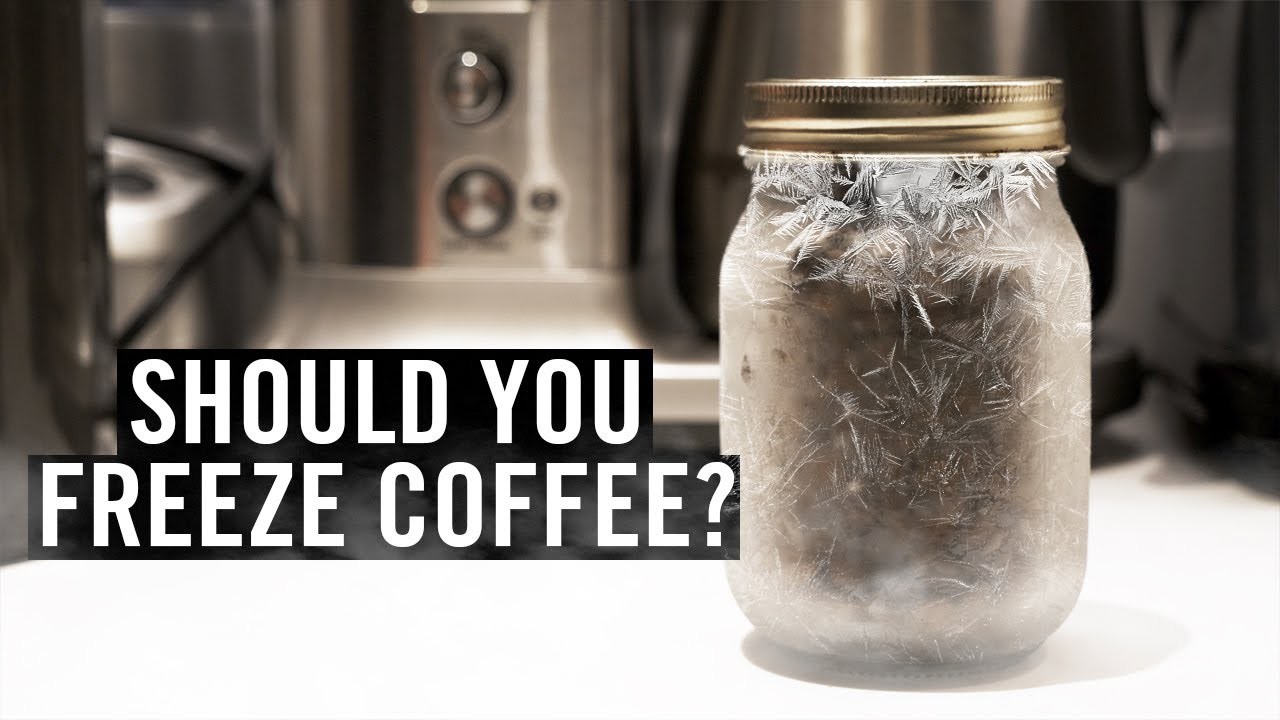
Roasted coffee goes stale through oxidation, moisture and the slow escape of the compounds that give it flavour. Cold slows all three, and an ordinary home freezer is cold enough to matter — the part most people get wrong is not the temperature but how many times the bag goes in and out.
Quotes
 Quotes
“Everything is about temperature. Everything everything.”
“Based on these findings, we recommend storing newly roasted beans in a freezer and refrain from storing at room temperature.”
“as far as we currently know, in & out of the freezer over a week+ is net worse for your coffee than room temperature storage.”
“Freezing is like bottling - it dramatically slows the aging process and lets you get 'barrel fresh' taste later.”
“Vac sealing is good and the material is solid as far as transmission rates, but you're also sucking out some volatile organic compounds.”
Facts
 Facts
Cold slows staling 16× — Staling is chemistry, and cold slows chemistry: reaction rates roughly double for every 10 °C, so a −20 °C freezer runs the process about 16 times slower than a shelf at 20 °C. That figure is
 Christopher Hendon's, from a Re:co Symposium talk on cryogenics, and he gives it as an order of magnitude rather than a measurement.
Almost nothing actually freezes — Almost nothing in a bag of roasted coffee can actually freeze. The beans lost their water in the roaster, so a freezer holds them cold rather than turning them to ice — which is why the
2016 grinding study found no lasting change: beans chilled to liquid-nitrogen temperature and warmed back up ground like beans that had never been chilled.
Frozen beans grind more evenly — Cold beans grind to a narrower spread of particles. Cooling towards liquid-nitrogen temperature cut the modal particle size by 31% in the
Smell test grouped frozen with fresh — The consumer case rests on
a 2018 aroma study where people sorted fresh, freezer-stored and room-temperature samples by smell: the frozen coffee grouped with the fresh one and room-temperature coffee stood apart. Two limits matter — panellists smelled ground coffee rather than drinking it, and the dark roast changed more at room temperature than the light one.
Cold kept the aromatics — A
2024 study stored arabica at 5 °C and at 20 °C for a month: the warm samples drifted towards earthy, sharp and smoky with less chocolate and sweetness, while the cold ones kept more of the volatile compounds that make coffee smell like anything.
Screw cap beat clips —
Voices
 Voices
Advice · YouTube ·
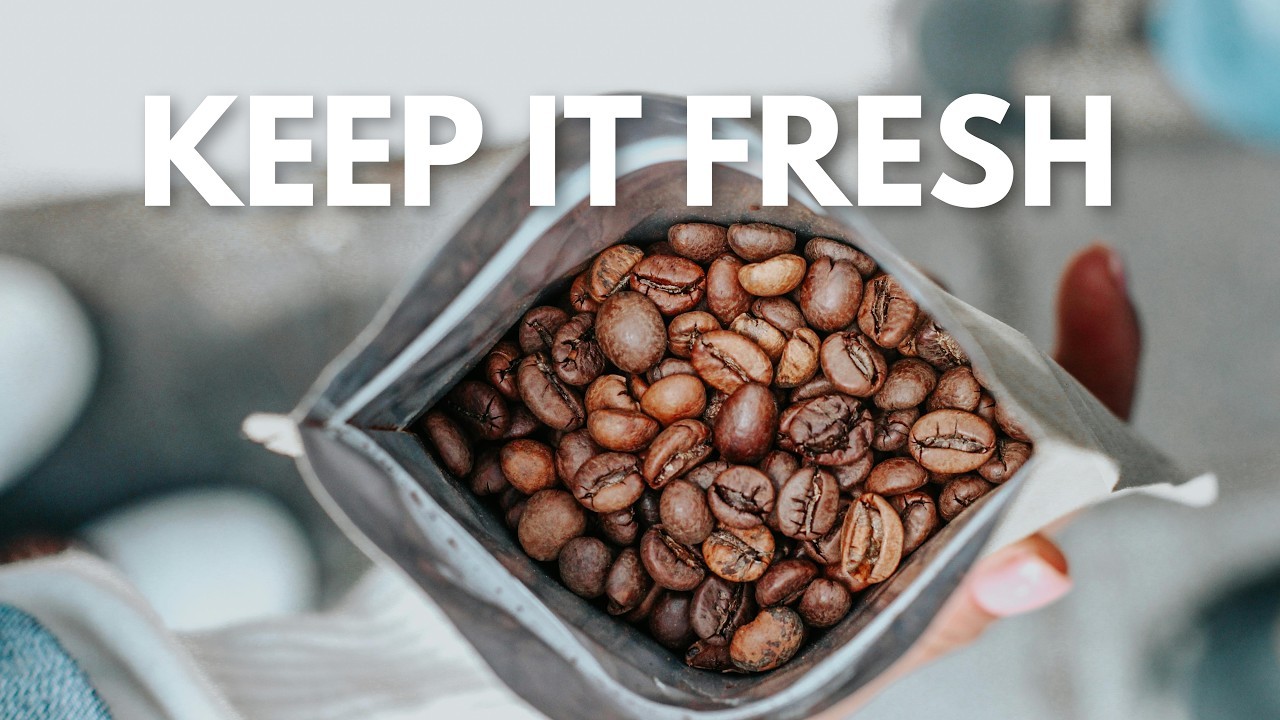
James Hoffmann — Portion once, thaw unopened — The rule that follows is portion it once and freeze it once: split a kilo into one- or two-week bags, press the air out, and thaw each bag overnight without opening it, because cold beans meeting warm room air collect condensation — a bag that commutes in and out fares worse than coffee left on the shelf.
More notes
Voice · Objection · YouTube ·
Lance Hedrick — Two caveats outside the studies — Two caveats sit outside the studies: vacuuming “can pull aroma out along with the air”, and his read of the literature is that recommended rest windows are not supported, leaving temperature, a small opening you rarely disturb, and drinking an opened bag quickly as the variables with evidence behind them.